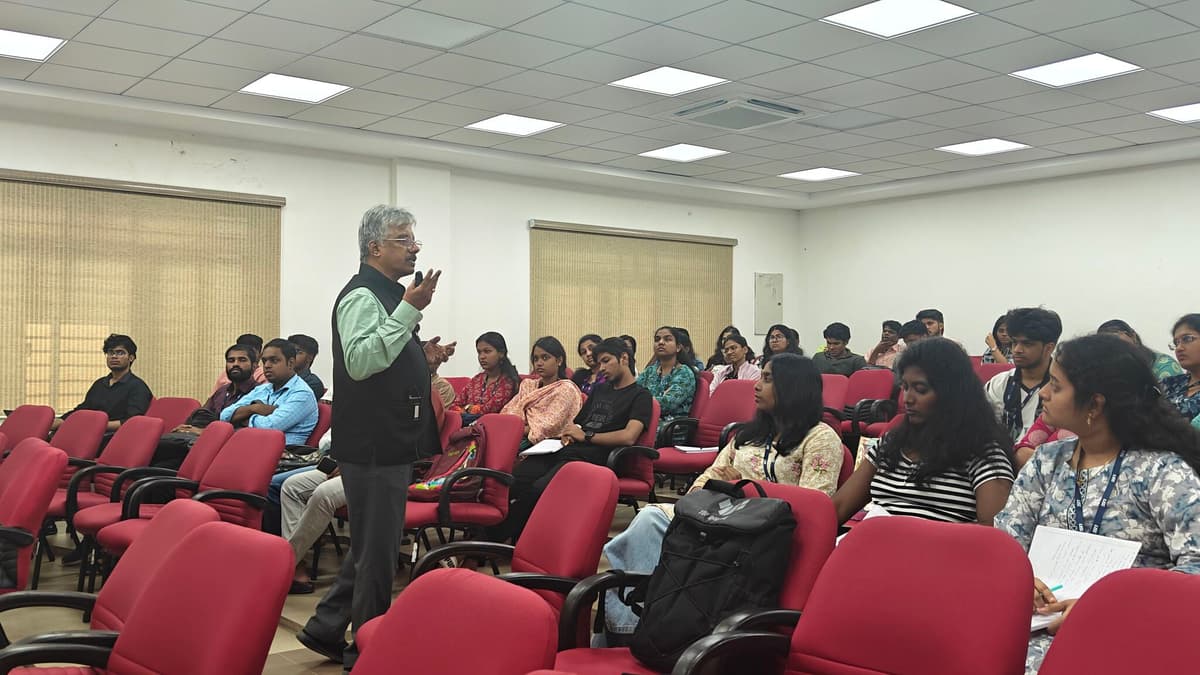
29–30 December 2025
SSN College of Engineering, Chennai
A two-day Design Thinking value-added course for about 70 students. Of 68 students assessed, the average score was 99.3%, and 57 scored a perfect 30 out of 30.
For colleges: value-added courses
Design Thinking, Systems Thinking and Business Storytelling, taught by a practitioner with over 40 years in industry. Hands-on courses of 7.5 to 15 hours for engineering and management students, with an assessment at the end.
Dr. Sundararaman Chintamani · Reinvention Catalyst for the AI Era · 129+ engagements since 1993 · In person in Chennai · other cities and online by arrangement
Colleges ask for a value-added course when the syllabus alone is not enough. Here is what heads of department usually tell me.
Employers say graduates know the theory but struggle to frame a problem, weigh options and explain a decision.
A value-added course is worth running only if students learn something no regular paper teaches.
A course that is mostly slides loses the room by the second hour. Students need to do, not just listen.
Accreditation teams look for a clear outline, attendance and an assessment. The course has to produce them without extra work for faculty.
Departments need a course that arrives fully designed and runs without adding to the faculty workload.
A course taught by someone from industry gives students examples and expectations they rarely hear in class.
Each course is built around one way of thinking and taught through activity, not lecture.
Design Thinking, Systems Thinking or Business Storytelling, in 7.5 to 15 contact hours. The outline is shared with the department for approval before the course begins.
Shorter sessions spread over weeks give students time to reflect and complete assignments. Intensive days suit a semester break. Both have been run successfully.
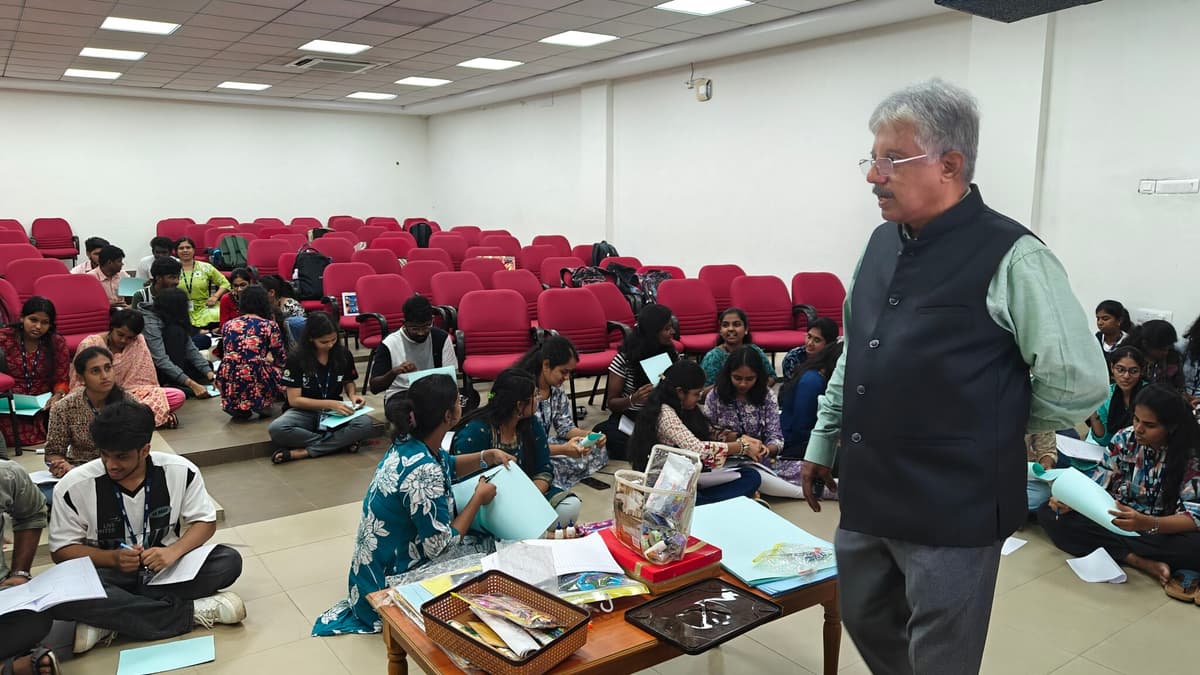
Students build paper prototypes, play systems games and draft their own story files. Every concept is tried in the room, in small groups.
The course ends with an assessment. The department receives the outline, attendance and results for its records.
Courses suit engineering students of any branch and management students. Examples are chosen for the department: plant and process cases for chemical engineers, product and software cases for computer science, business cases for MBA students.
What the department gets when it books a course.
The Stanford d.school five steps, with empathy maps, customer journeys, idea tools and paper prototyping.
Structure, relationships, feedback and delay, learned through group games. Built as a five-module series.
Story structure, the business story matrix, a personal story file and storytelling with data.
Over 40 years across petroleum refining at CPCL, IT services and consulting. Students hear how these methods are used at work.
Design Thinking workshops for Cisco, Tech Mahindra, TVS Electronics and Accenture, and Design Thinking with TRIZ for young engineers at Sona Comstar.
Visiting faculty at the School of Petroleum Management, PDPU, and faculty for the Petroleum Refining paper of the BITS Pilani–CPCL programme.
Including Business Storytelling for Leaders and Professional Speaking 101. See Our Books.
Colleges and universities he has taught at include
29–30 December 2025
A two-day Design Thinking value-added course for about 70 students. Of 68 students assessed, the average score was 99.3%, and 57 scored a perfect 30 out of 30.
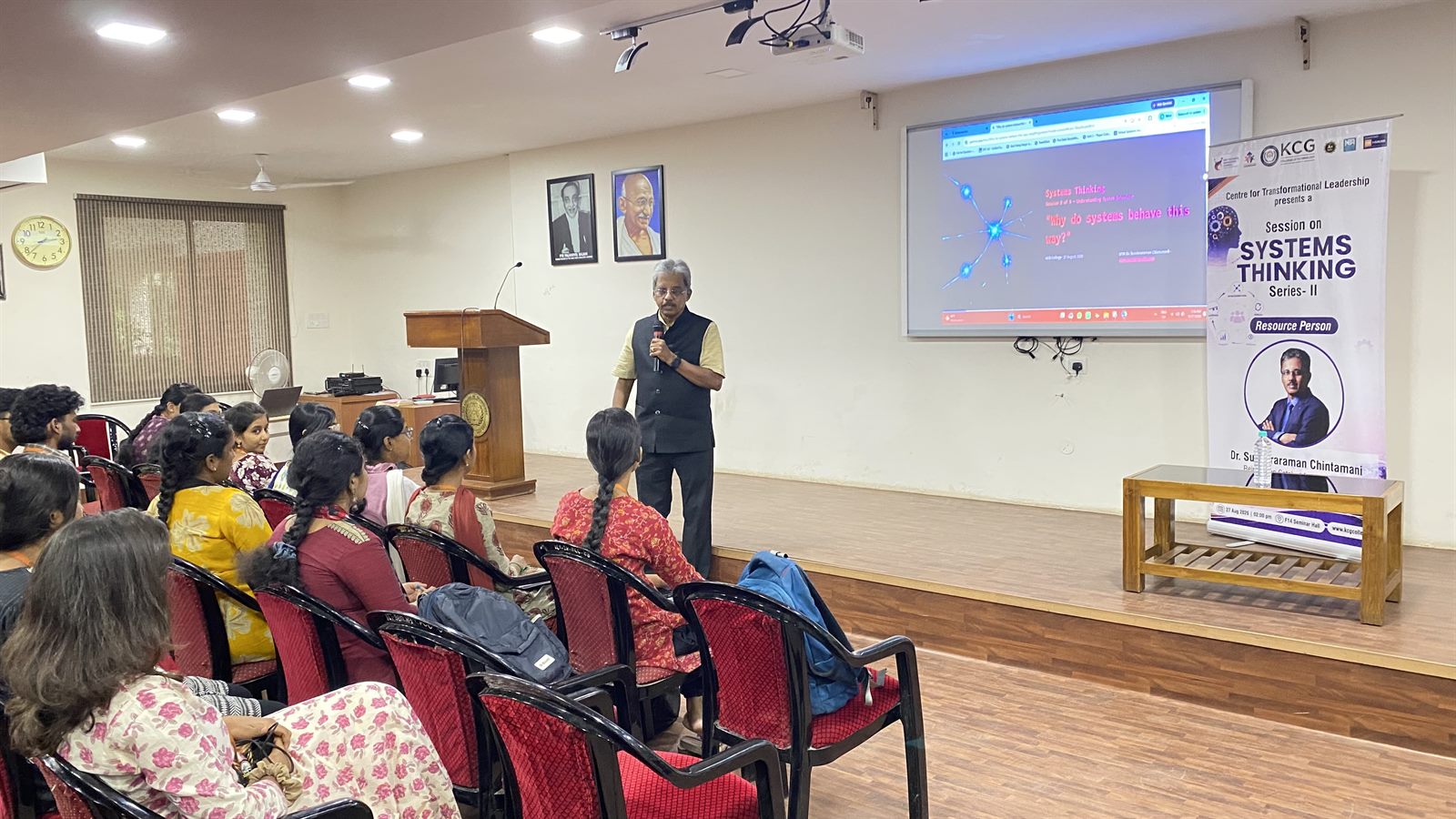
7 and 27 August 2026
The first two modules of a five-part Systems Thinking series for Computer Science students, taught through group games, with assignments between sessions.
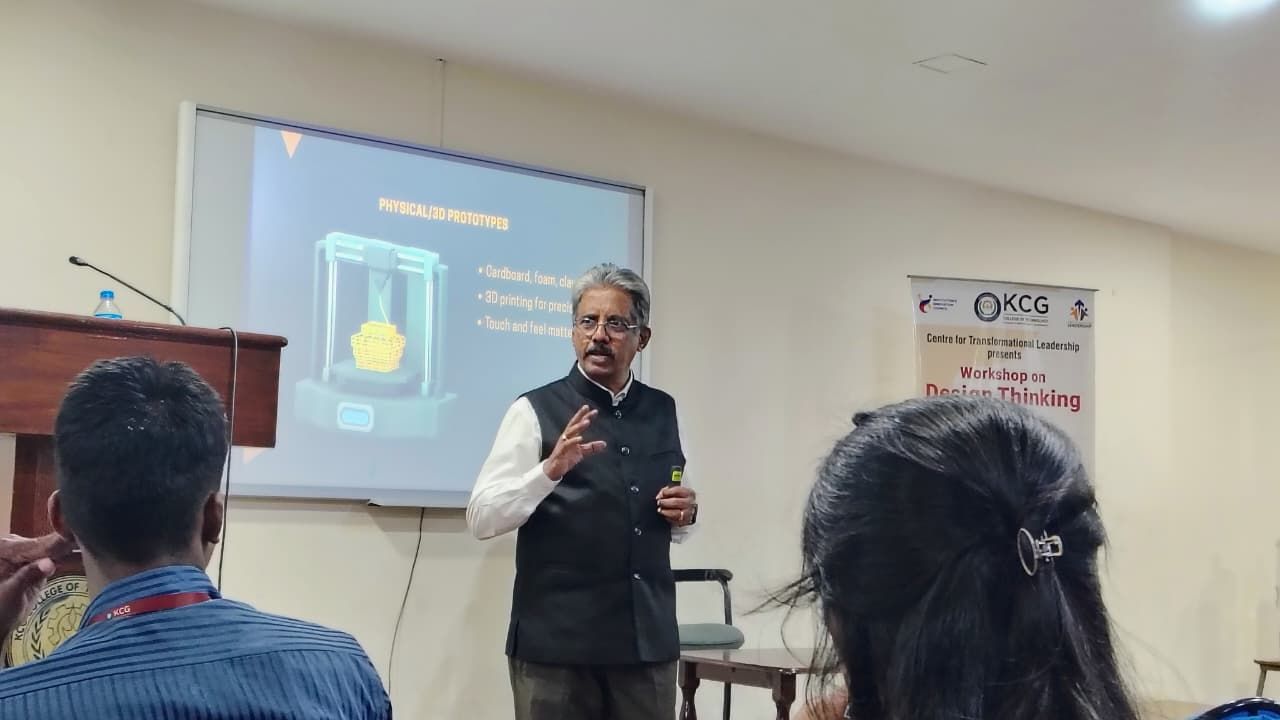
11 December 2025 and 8 January 2026
A Design Thinking series for engineering students, ending in paper prototypes of an app the students designed themselves.
28 August 2026
A session in a 10-day value-added course for Chemical Engineering students, on Industry 4.0 in the chemical and oil and gas industries.
3 October 2023
A day-long Design Thinking workshop for students of VIT Chennai and other engineering colleges in Tamil Nadu.
3 August 2023
A hands-on mind mapping workshop for HRM students.
October 2019
A course on Enterprise Asset Management for Oil and Gas for management students, as visiting faculty.
See all 129+ engagements since 1993 →
“He organized a Design Thinking workshop in association with E-Cell IIT Madras and EDII which was very informative as well as very enjoyable at the same time.”
7.5 hours, for example five sessions of 90 minutes spread over a semester.
Two days, about 14 hours, during a semester break.
Up to 15 hours over four days, with more practice and a final project.
The same subjects as a faculty development programme.
Between 7.5 and 15 contact hours. Seven and a half hours covers the core of a subject. Fifteen hours adds more practice and a final project.
Both work. Spaced sessions give students time to reflect and complete assignments between modules. Intensive days suit semester breaks and busy timetables.
Yes. Every course ends with an assessment, and the results are shared with the department.
The department receives the course outline, attendance and assessment results. How the course is recorded is the college's decision.
Engineering students of any branch, and management students. The examples are chosen for the department, so chemical engineers, computer scientists and MBA students each see cases from their own field.
Up to about 70 students per batch works well for hands-on activity. Larger groups are split into batches.
Yes. Each subject can also run as a faculty development programme.
Courses in Chennai are taught in person. Other cities, and online delivery, can be arranged. The hands-on parts work best in the room.
It depends on the subject, the number of hours and the number of batches. Tell me what your department has in mind and you will get a clear figure.
Share the date, the city and the audience. You will get a clear reply.
Or call +91 98409 23764 · [email protected]